Overview
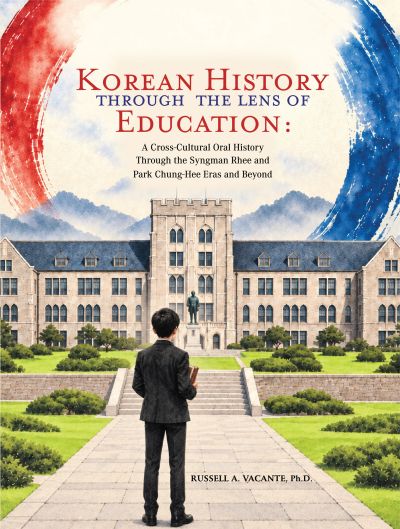
Korean History Through the Lens of Education: A Cross-Cultural Oral History through the Syngman Rhee and Park Chung-Hee Eras and Beyond offers a profound, bottom-up perspective on South Korea's turbulent journey to modernity. Focusing on the critical transition from the end of Japanese colonial rule in 1945 through the 1960s, this collection captures the lived experiences of twelve individuals navigating immense socio-political upheaval. By centering formal education as the narrative anchor, this book reveals how academic achievement served as both a vital survival tool and a pathway to social mobility in a rapidly transforming nation.
Description
The interviews—conducted in English to bypass the hierarchical constraints of the Korean language—provide unfiltered insights into the realities of the Korean War, the shift toward Western educational models, and the complex legacies of leaders like Syngman Rhee and Park Chung-hee.
- Bottom-Up Historiography: Contrasts official, top-down academic records with the intimate, everyday realities of historical events.
- Cross-Cultural Methodology: Employs second-language interviews to encourage franker, more direct conversations across cultural boundaries.
- Educational Evolution: Traces the nation's pivotal shift from colonial schooling to widespread university expansion and democratic pedagogy.
- The "Korean Spirit": Highlights the resilience, adaptability, and unwavering commitment to learning that fueled the rapid economic modernization known as the "Miracle on the Han River".
Paired with a targeted historiography of five critical texts on the era, this collection successfully bridges the gap between official political history and deeply personal memory. It is an essential volume for historians, educators, and anyone fascinated by the enduring power of human tenacity in the face of national transformation.
Overview
This study delves into the impact of Japanese colonial education on Korean students. Through oral histories from seven individuals who experienced colonial education from primary school to college, the study examines how formal education influenced their attitudes towards Japan's colonial rule.
Description
This study investigates the impact of Japanese colonial education in Korea. It examines how formal colonial education affected the attitudes and behavior of Korean students towards Japan's colonial domination of Korea. The lived experience of Koreans who attended school during the colonial era, beginning with primary school and ending with college graduation, forms the focus of this study. The seven individuals presented in this oral history project tell of their colonial educational experience and how they believe this experience affected their attitudes toward Japanese colonialism.
Their account of this experience provides us with insight into the sociopolitical tension, at the personal level, created by Japanese colonial education. This study also provides fresh insight into the relationship that educational achievement has to nationalism. In order to gain a perspective on colonial education from the bottom up, questions such as the following were posited: (1) what motivated Koreans to attend government schools, (2) what the socio-economic backgrounds of students were who received a colonial education, and (3) what impact did colonial formal education have on student political consciousness.
To gather this and other information that goes beyond that contained in established
colonial literature the interviews were conducted within the framework of the following three questions: (1) did students' attitudes change according to the length of time they spent in school, (2) what influence did the family have on student political attitudes and what affect did colonial schools have in changing those attitudes, and (3) did the type of education a student received, i.e., academic or vocational, affect his perception of colonialism. These three categories were established less to get answers to specific questions than to derive a dense biographical discussion and narrative that then could be analyzed in depth. This study does not make a general statement about Japanese colonialism or colonial education in Korea. It does provide keen insight into the lived colonial educational experience of Koreans and the effects that such an experience had on their attitudes
and behavior.
